
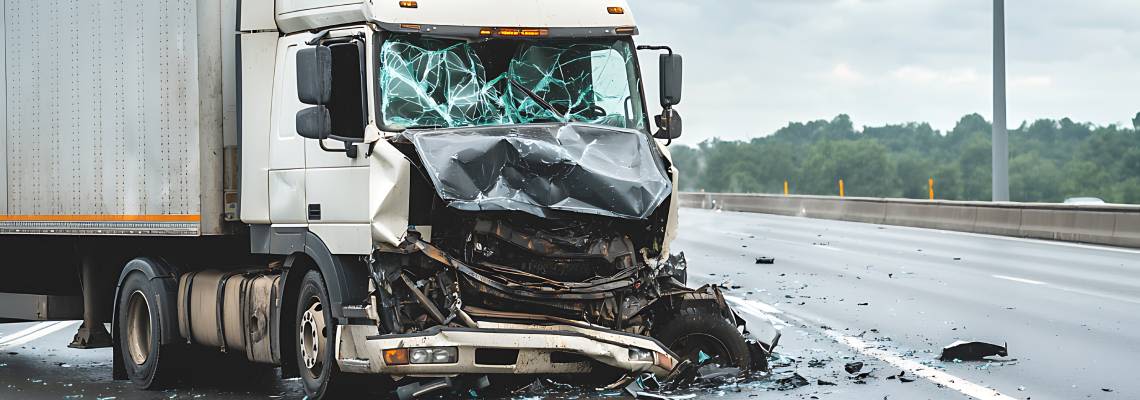
Commercial Truck Accidents-When Can a Company Be Held Liable for a Driver's Actions?
Commercial truck accidents often cause devastating injuries and property damage because of the size, weight, and scale of the vehicles involved. In many cases, a trucking company can be held liable for a driver’s actions if the driver was acting within the scope of employment, the company’s negligence contributed to the crash, or it failed to properly hire, train, supervise, or maintain its fleet.
Liability depends on the relationship between the driver and the company, the cause of the collision, and whether the company violated federal trucking regulations. At Abrahamson Law Office, in Omaha, Nebraska, our attorneys provide dedicated representation to help injured clients understand when a company, not just an individual driver, may be financially responsible. Call us to schedule a consultation.
Why Does Company Liability Matter in a Truck Accident?
Collisions involving semi-trucks, tractor-trailers, and other commercial vehicles often cause catastrophic injuries. Victims may face extensive medical treatment as well as potentially lost income, permanent disability, and significant pain and suffering.
In a typical passenger vehicle accident, liability may rest primarily with the at-fault driver. In a commercial truck accident, however, the driver may have been working for a trucking company, hauling cargo for another business, operating a third-party vehicle, or following delivery schedules set by an employer. As a result, multiple parties may share responsibility.
When a company can be held liable, it may potentially provide greater compensation and a more straightforward path to recover damages. It can also help ensure businesses are held accountable when unsafe practices, whether by the company or the driver, put others at risk.
Opportunities Where the Company May Be Held Responsible
In both Nebraska and Iowa, trucking companies may be held liable for a commercial truck accident for several reasons. Depending on the circumstances of the accident, the possible avenues you might be able to pursue include the following.
Vicarious Liability
One of the most common ways a company may be liable is through vicarious liability, often referred to as respondeat superior. Under vicarious liability, an employer can be held responsible for an employee's negligent actions if they occurred within the scope of employment.
For example, if a truck driver causes a crash while making deliveries, transporting freight, or otherwise performing job duties, the employer may be held liable for the harm caused. In these cases, the key question is usually whether the driver was acting on the company's behalf at the time of the accident.
However, companies and insurers may argue that the driver was acting outside the scope of employment. If the driver had significantly deviated from work duties for personal reasons, the employer may try to avoid responsibility.
Direct Negligence
A company may also be held liable for its own negligence, separate from the driver’s conduct, if its behind-the-scenes actions directly contributed to the collision. Some examples of direct negligence may include:
Negligent hiring of an unqualified or unsafe driver
Failure to conduct background checks or review driving records
Inadequate training for commercial vehicle operation
Poor supervision or retention of a driver with a known history of violations
Failure to inspect, repair, or maintain trucks properly
Encouraging unrealistic delivery deadlines that lead to speeding or fatigued driving
Violations of federal safety regulations
If a company knew or should have known that its business practices created a risk of harm, it may be held accountable for the accident and any resulting injuries or damages.
Hours-of-Service Violations and Driver Fatigue
Driver fatigue is a major factor in many commercial truck accidents. The Federal Motor Carrier Safety Administration (FMCSA) limits how long truck drivers can operate without rest. A tired truck driver has slower reaction times, impaired judgment, and a higher risk of devastating mistakes, and these hours-of-service regulations are designed to reduce fatigue-related crashes.
When a trucking company pressures drivers to meet unreasonable schedules, ignore required breaks, or falsify logbooks, the company may share liability for an accident. In some cases, dispatch records, electronic logging device data, GPS information, and internal communications can reveal whether the company contributed to unsafe driving practices.
Maintenance Failures and Unsafe Equipment
Trucking companies must keep their vehicles in safe operating condition. Large trucks require regular inspections, maintenance, and prompt repairs. If the vehicle’s brakes fail, tires blow out, lights malfunction, or cargo is improperly secured, it can often result in a severe accident.
If a mechanical failure caused a crash, you and your attorney may investigate whether the company skipped inspections, ignored known repair issues, or failed to comply with maintenance requirements. In some cases, liability may also involve third-party maintenance providers, parts manufacturers, or cargo-loading companies.
Preserving maintenance records is essential in these cases. Trucking companies often control the evidence needed to show whether they met their legal obligations, so your attorney will need to submit the necessary request for information.
Evidence That Can Help Prove Company Liability
Nebraska truck accident claims often require immediate action because important evidence can quickly disappear. Compared to ordinary car accident cases, these claims typically involve more records, more potential defendants, and more aggressive insurance defense strategies. The primary types of evidence that may help establish company liability include the following:
Driver qualification files
Employment and training records
Hours-of-service logs and electronic logging data
Black box or event data recorder information
Truck inspection and maintenance records
Dispatch instructions and delivery schedules
Drug and alcohol testing records
Cell phone records
Police reports and crash scene evidence
Witness statements and surveillance footage
A prompt investigation can make a significant difference. If you have been involved in a commercial truck accident, our Nebraska truck accident attorneys can submit a preservation letter to help prevent key evidence from being destroyed or overwritten.
Contact Our Experienced Truck Accident Attorneys in Omaha, Nebraska
Trucking companies and their insurers often begin building a defense immediately after a crash. Their goal is frequently to limit liability and reduce payouts. For injured victims and their families, this can create an uneven playing field.
At Abrahamson Law Office, our attorneys, Hugh I. Abrahamson, Jill M. Abrahamson, and Robert E. Larsen, understand the importance of identifying every potentially liable party and every available insurance policy. We can help determine whether the company is responsible under vicarious liability, direct negligence, or both, and document the full extent of your damages, including medical expenses, lost wages, future care needs, and pain and suffering.
If you or a loved one has been injured in a truck accident, contact us to schedule a consultation and pursue the compensation you deserve. Located in Omaha, Nebraska, we serve clients throughout Nebraska and Iowa.